EUROSPORT TENNIS LEGENDS PODCAST - WIMBLEDON 2019
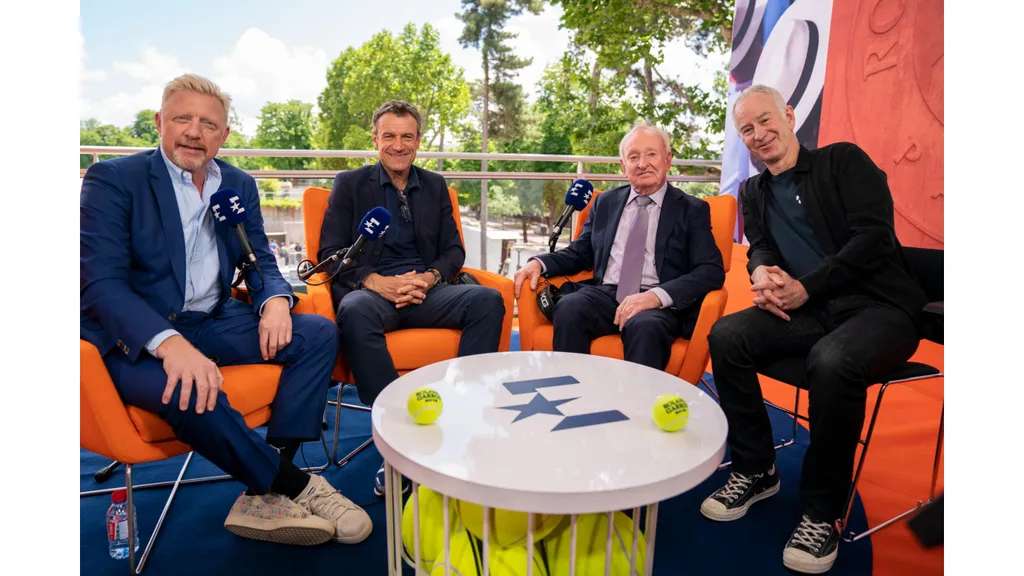
Mats Wilander, Boris Becker and John McEnroe sit down at Wimbledon and rave about the 15-year-old phenomenon Cori Gauff and what Naomi Osaka and Alexander Zverev need to do to rediscover their form and love of tennis.
Listen to the full episode HERE or via the SoundCloud link at the foot of this article.
Mats Wilander: Today we’ll focus on young players. Tsitsipas, Zverev and Thiem are all out – how much is that to do with movement on grass, or they just don’t have enough experience?
John McEnroe: How long is this podcast? How much time do we have? I think for each individual there’s different reasons. Tsitsipas is someone who we were expecting a lot from and he was expecting a lot from himself - and he’s embracing the idea of trying to be the best which I like. However, he doesn’t seem to quite understand the movement yet on grass and court positioning which I think is important, and that has caught up to him. He hasn’t quite learned how to be his best on grass, he’s young and hungry so I assume he’ll figure it out.
Zverev’s a different story altogether. I think whatever is happening off the court, I don’t know if it’s issues with the parents and the coaching, and the relationship, or if there’s some type of lawsuit going on with his ex-manager or whatever it is. He doesn’t seem like he’s ‘out there’, his head is not on the court. So, that automatically takes you from four or five in the world, in my opinion, to 100 in the world and you can lose to a lot of people. He’s way too negative, it looks like the pressure has got to him.
Thiem is a different story because he’s older. He’s sort of not the ‘next gen’ and he’s never been comfortable on grass, and that was arguable the toughest first round draw. To have to play Querrey, who just goes and bangs. He should have won the second set, he was up a set and he got unlucky. But, he didn’t look like he did what was necessary mentally, I don’t know if he’s still tired or bruised up from the clay. Especially after he lost the second set, he just gave in which is disappointing to see him go away.
MW: Boris, you won in ’85 and defended in ’86, did you go cold after that thinking you’ve had all this success?
Boris Becker: It’s the biggest conversation you should have – why these young superstars don’t take it over in the majors – and there are a number of reasons for it. I think the biggest question for me is their mentality. Are they willing to do what it takes to be successful at the Slams? I find their scheduling terrible, they play every week, and thinking like this you’re going to find form in a major where they’ll actually be extra tired once the major starts. That goes for all players. In the case of Thiem, he actually didn’t play a single grass court tournament before Wimbledon so you can’t knock him for playing too much, almost not enough. But, the bigger question is pressure. Naomi Osaka obviously has a difficult time handling her number one status, she lost it now actually to Ash Barty. After her loss here she cried in her press conference of not feeling comfortable on the court, she looks like she’s in misery playing tennis on the court right now. This is a young woman, she needs to embrace… I don’t know who her supporting team is at the moment but they’re not doing their job in making her comfortable. She’s the new superstar in women’s tennis, she plays beautiful, she looks great, she has a great family story to her, and after she won the Australian Open, it’s gone south.
JMc: Well she got rid of her coach for reasons that we don’t know exactly what they are. Anytime some young player, who finally finds her footing, wins two majors in a row – one with a lot of adversity with Serena and that match at the (US) Open and then go to Australia, and then right after that get rid of her coach. Something’s going on behind the scenes because if nothing else we’re a superstitious bunch. So, you would wait at least until you lost at the next major or give it a couple of majors before you would move on. So something has definitely affected her. But, what Boris alluded to, is really what it boils down to: it’s the mentality, handling things. Why aren’t these guys handling things? You look at Zverev. If you look from the outside looking in he’s doing everything right. He’s got a team, he’s got a physio, he’s got everything. On top of that, at the end of last year he brings Ivan Lendl into the mix. So you’re thinking he’s won the O2 Masters, he’s ready now to make that next step, what’s happened? So to me it’s not a physical thing, it’s got to be a mental thing.
MW: I’m going to throw it in there, because we’re actually talking about players that are still traveling with their parents, very close to them. Is there a situation where that we can somehow open and discuss because I understand the advantages of having your parents travelling with you when you’re very young, maybe especially a girl, but at some point, do they not have to let them go? Even if they’re coaching them, so that these players can start making decisions on their own after court but also on the court. We know Sascha Zverev’s father was a really good tennis player and it’s been great for him but even then is there a time when you have to let them out in the big world?
BB: Big question, sensitive one. Every person is different, but that comes a time, especially for young guys, young men, boys, to eventually be on their own, have a coaching team that is not part of family members, I think that’s important. Sascha trusts his father, of course, you’re right, he knows a lot about sport, but it’s about maturing and finding on your own what’s good and what’s bad. Tennis is a lonely sport, you have to do all your decisions on the court by yourself, and you can’t ask your father: “should I hit the backhand or the forehand?” You have to do it on your own and sometimes these responsibilities are taken in a way too much, so they can decide on their own.
JMc: I think this is an incredible question. You look at the Zverev and Sharapova and you’re thinking maybe it’s their backgrounds, their upbringing or maybe their parents upbringing. It feels like their parents want to remain close, and you get that in a lot of ways, but the absolutely thing is that it’s time to sort of take a step back and decide to grow into your own person and make decisions for yourself and not rely on them. You know, what time is that for these, but it seems that it should have already happened to me. And that’s not know and what’s going on behind the scene, but it absolutely feels that’s it’s going way too far in that direction.
BB: On the women’s tour, it’s different because fathers figure always played a big role in the history as well. You talked about Steffi Graf, Monica Seles, Serena Williams, the father figure was always very important, it’s was part of the picture. So, it’s a bit different for the women tennis than for the men.
MW: But they let go it seems. Sharapova’s dad at some point, sooner or later, and then they still have their best tennis kind of ahead of them. So, then we’re coming up to Coco Gauff, I mean, 15 years old. First question is simple: is she the next star? What you see?
JMc: I think she’s going to be the number one player in the world, without a doubt. I mean, I hope that it’s handled properly. It sounds so far, because you hear the parents saying the right thing. Here’s the question - she’s better than almost everyone to me already, once she gets out there, but she’s only allowed to play 5 tournaments until March. Should they allow her to play more tournaments? Because she doesn’t turn 16 until then? But what if she’s in the top 15 in the world? Which, to me, looking at her, she could very well be. I think this has to be handle very gingerly because to me, less is more early on. It’s like looking at Venus Williams, she had a daughter at 24, I mean, she’s 39 now, she 15... I mean, the way she plays, the way she moves, so many similarities. So, this is a great question. Anisimova and her, these 2 players that you have to believe that both going to be at the top of the game, how to handle this at 17 and 15 years old, to make sure they’re happy playing into they’re 30’s perhaps. This is like a 20 years span, you want to see with Coco Gauff.
BB: But isn’t that what we say about Osaka 6 months ago? She’s going to be the future star, going to go up and winning? But once you start winning majors, the landscape changes, the parents change, the money change. And you, as a person, you change. You, all of a sudden, are the hunted, you’re expected to win. Coco Gauff was the youngest qualifier in the main draw. For her to play against her childhood hero, was the match of her life. Now it’s the second round and the pressure is on her a little bit and that will grow the more she wins. So now we go back the question of mentality. Who is guiding her and who is in her corner preparing her for these situations.
MW: So are we more or less likely to see superstars and do we need to see a new Roger, Rafa, Serena or Novak, or less likely as they are not as strong mentally as the older generations? Do we want to see superstars? I mean you guys were superstars in the 80’s but even then we had different people winning on clay and grass so do we want to see someone who wins everything?
BB: Well there is going to be a big void once the top three will retire as the next generation can’t possibly overtake them, like they did. But again we are talking about a 10 or 15 year road that lays ahead, and again, as we mention, they are good enough on the tennis court but, as the three of us know, the Majors are not decided in the second week by your forehand or backhand. They are decided by your mentality, by your mindset and by the people you surround yourself with – who can teach you a thing or two about these types of situations. I feel there is a void in tennis with these supercoaches – I mean we’ve all coached a little bit and know a thing or two about it – but there are not many have who have actually won a major so how can you explain to a junior or young player what you have to do before a final, because you’ve never been there.
JMc: In 2002, Pete Sampras won his 14th Major, he passed Roy Emerson and you thought ‘OK that took 35 years and he’s going to have this record for at least 30 years’. Fast forward 15 years and you three guys that have passed it. No one, in their wildest dreams, would have thought that would happen and it would be so one-sided and they’re still going to win more. So, someone is going to step up because these guys at some point have to quit. Of course you need superstars – it is key in the one-on-one game to have superstars. You desperately need rivalries. We have been waiting we have seen a guy like Felix Auger Aliassime - the male version of Coco Gauff – very similar. He has it all. I’d be amazed, unless something unforeseen happens, that he is not in the next five years the number one player in the world.
MW: But we’ve always talked about John, since Bjorn quite, your tennis, for a few years, was unbeatable. But you felt you lost a bit of a challenge, and with Federer feeling so lucky he got Rafa and Novak to give him a bit of a challenge and push him to a higher and better level of tennis.
JMc: That’s exactly why we’ve been hoping and praying that guys like Tsitsipas, Khachanov, Couric or an American, Shapavalov – what’s happened to him in the last six months? A lot of it has to do with the money. I don’t know if they’ve lost there edge. We’ve talked about parents. There is a lot going on with these kids. Then you’ve got these ultimate professionals, these guys who just continue to raise the bar. You have to admire their desire to win. You can’t just bottle that. This has been the most extraordinary 10-12 years I’ve seen in tennis. To see these guys make each other this much better and sort of leave everyone in the dust.
BB: But you’ve talked about the ultimate professionals but you were a professional at 21. You [Mats] won Majors in your teenage years, I did too. Why is it not possible for these younger players to be as professional as these older players?
MW: Maturity level I think. A lot has to do with parents not letting them go – I really believe that.
JMc: In addition to the fact that the ball is being struck harder. I look at you Boris, I look at Rafa Nadal and I look at Auger Aliassime and, at 18, he looks 25. It’s very rare for that to happen and he is one of the few guys that would have a chance to break it. He is professional. Shapovalov has been professional but then you throw in to the mix that his mother has pretty much got rid of every coach and manager and is pretty much taking care of everything. So that has severely complicated things. Couric, was a guy that didn’t make the breakthrough. He’s injured here. He was professional. Zverev is professional. There is one thing you have to take in to account – they are not as good as these guys. If you match them up against Roger Federer, Rafael Nadal, Novak Djokovic, even Andy Murray to an extent, you look at any of those guys and say they are better – at this time or any time.
BB: Isn’t that the real problem, that these guys are not as good?
JMc: Yes that is the real problem and then you add on other factors and it becomes more difficult.
MW: Then you can’t see what the biggest difficulty is and that’s mentally. We are going to move on to Ash Barty, to me, in terms of the way she plays tennis she is one that can stay at the top of the game, she can win on every surface. What do you guys think about the way she plays tennis? She is completely different, topspin forehand, hits a lot of slice backhands, what do you think of that?
BB: Old-school tennis I call it, it’s wonderful to see that with a backhand slice, a bit of serve and volleying, changing the tempo you can actually win a major on clay, and that’s the loud and clear message to all the other youngsters out there, it’s not a one way street, there isn’t just one way to play when you are 15 and 16. It’s a wonderful story because she’s had her ups and down because she quit the game to pursue cricket because she didn’t want to play tennis anymore, it’s a brave move to do. It was for her maturity, her mind, we talk a lot about our minds, she wasn’t comfortable playing tennis, and then she has a support team that’s been with her for a long time, no big names, no flashy characters but she trusts them and you should never change a winning team.
JMc: I would hope that in the future that any young coach or girl or parent would watch tapes of her, study the way she plays the game, her understanding of her core position, understanding the geometry of the court, I would hope and pray that more boys and girls start to play the game she does. She is 5ft5in, that’s the part that I would worry, her height is going to catch up to her because she is going to have to push harder against the big hitters, they are going to be hitting big shots which may cause issues with her physical health, but as far as what she does when she’s playing, absolutely fantastic.
BB: Isn’t that wonderful about our sport that you can be that height and be the number one player in the world? It’s not just about your physicality, it’s about your mental strength.
JMc: She’s got a pretty darn good serve for someone of her height, of any height for that matter. It would be difficult to pull of in the men’s side, it would be the equivalent of 5ft9in for a guy, so it should be inspirational for any small person that she can do it all.
MW: I have to ask you John because you’ve been worrying me in the last week or so where he’s been talking about trying to hit a forehand with a semi-western grip. The obvious question is not are you going to be able to do that, because we believe you can, because if anyone can change something it would be John. But could you play your style of tennis and survive today, as we have watched and seen Roger Federer serve and volley more than ever at Roland-Garros and reach a semi-final. You were different, it took some time to get used to your game and Jimmy Connors game, but today there are a lot of players that play the same way. My question is, could you have played today in your own way?
JMc: I would like to think that I would be able to play a close version of the game I played, I would put it somewhere in the middle of the way I played because of the courts, because of the bounce, because of the speed and what Shapovalov does, because he plays with a lot of energy, we are similar heights, he has a lot of explosion and he uses his balance and timing to create power, he’s got a lot of power for a guy that’s not that big compared to the other guys. I would not have done all serve and volley because I don’t think that’s conceivable but mixing it up a lot more frequently. I would’ve found a hybrid style which I like to think would’ve worked. I don’t care who you are, it’s tough to look at these guys at their best and say, ‘you won the French three times, even you might think it won’t be easy to play Nadal on clay’. You look at certain guys and no matter what, you’ve got to go out and think if you can get a couple wins against them, make them think a little bit you’ve got a chance. I’d like to believe that could happen if I played now. I would love it are you kidding? You people think we want bad bounces all the time? I believe the level of our game would have gone up, it’s inevitable.
BB: Quick answer, absolutely. It’s a sign of the times how we played, that’s how we played then. I am sure we would’ve adjusted our games to match the top three. But I am going back to it, it’s not about the forehand and backhand, if you have a champions mentality you will always find a way to win, you will always find to play well under pressure, that sets the top three apart from all the other players it’s their mindset, not their game.
MW: I am going to give you guys one last question, you don’t have to give me one name, but just because we are sitting here as Wimbledon is happening right now, but who is the favourite today? I know you will say Djokovic, Federer and Nadal, but who is your favourite?
JMc: Who would be the most likely player to win if it wasn’t any of the top three? That is a very difficult question to answer. Now I would put a guy like Anderson next on the list if he was healthy, he hasn’t played much but I know he’s a total fanatic and is completely dedicated to fitness and preparation. Having been around him a little bit at the Laver Cup, just seeing his professionalism, what he brings to the table., he is the fourth seed. I almost believe this guy Aliassime is just about ready if for some reason, I really believe now, it doesn’t mean I would pick him to win it by any means, but if I had to pick a guy who was ready to make that jump right now, it would be him.
BB: Similar background with the answer. Djokovic this year is different to last year. Last year was his comeback tournament, he needed to come back to number one and he wasn’t the favourite going in to last year. This year, he is the favourite but he is mentally, I find him a little bit softer than last year because of the wins he has had, because of the disappointment in Paris, he is not as strong as he was last year. He is hurting from the French, the question is, is the opposition strong enough to take advantage, as we speak now, it’s not. Federer this year is different than last year because I didn’t imagine him at 37 still being one of the favourites because of his performances now, not because of what he has done in the past. I rate his chances as almost the same as Djokovic’s at the moment. The big question for me is the outcome of Kyrgios vs Nadal, because Rafa last year was in the semi-finals. Kyrgios, can he come back? He needs this win more than Rafa needs it, will he keep his mind? Nick has all the qualities technically to win this tournament, now can he keep his mind together, at the moment I doubt it. Eventually he will wake up, he will mature and maybe that second round match against Nadal will be a defining moment in his career. Some of the younger guys I am with you, Aliassime has a lot of potential, I don’t know about going all the way but maybe a semi-final.
JMc: I can see Nadal potentially losing to Kyrgios and Kyrgios losing in the next round, that’s what I would say. I have one more question, what do you think of the Murray/Serena Williams mixed doubles pairing which came out yesterday.
MW: I think it’s good for Serena! It takes a little bit of pressure off of her singles, she gets a chance to hit serves under pressure, hit returns under a lot of pressure and get out there and play on the proper grass courts of Wimbledon, rather than on the off days’ work on different courts.
BB: I think it’s great for tennis, you get the world headlines, this match would be on centre court, it’s great for both players, I am so happy to see Murray play tennis again at Wimbledon. The whole picture is perfect.
JMc: Let’s hope if they get to the semi-finals that Serena doesn’t have to retire because she has to prepare for the final, for Andy’s sake, because I have been there…!
Name: Eurosport Tennis Legends Line-Up
Copyright: Eurosport

Eurosport Tennis L...
Contacts
Steve Stammers
Communications DirectorDan Tunna
Senior Communications ManagerLatest news

TNT SPORTS: BUILT DIFFERENT FOR DOMESTIC RUGBY
Every men’s fixture. Unmatched coverage of the women’s game. Unparalleled storytelling - TNT Sports is once again the destination for English domestic rugby for the 2026-27 season.
THE SNOW LEAGUE RETURNS TO EUROSPORT AND TNT SPORTS FOR SEASON TWO ACROSS EUROPE
Leading sports broadcaster renews its commitment to showcasing the world's premier snowboard and freeski competition across Europe
FANS TUNE IN AND TURN UP: WHOOP UCI MOUNTAIN BIKE WORLD SERIES HITS NEW BENCHMARKS IN 2026
With over a quarter of a million fans welcomed on-site so far, the 2026 WHOOP UCI Mountain Bike World Series is setting new benchmarks across live attendance, streaming audiences and digital engagement.
TNT SPORTS PARTNERS WITH ALZHEIMER'S SOCIETY ONCE MORE TO RELEASE NEW VIDEO CONTENT TACKLING DEMENTIA
One person can’t take on dementia on their own, it takes a team. That's why TNT Sports are once again partnering with Alzheimer's Society this World Alzheimer's Month to raise awareness of dementia.
US OPEN TENNIS COMES TO MILLIONS OF VIEWERS ACROSS EUROPE ON EUROSPORT AND HBO MAX
• Every match on every court at the 2026 US Open will stream live across 45 markets* in Europe on HBO Max with far reaching coverage on Eurosport • Action gets underway with Qualifiers and Mixed Doubles Championship from 24 August • Coverage of the year’s final Grand Slam follows record-breaking pan-European tennis audiences for WBD this summer
WARNER BROS. DISCOVERY CLOSES HISTORIC ROAD CYCLING SEASON WITH LIVE COVERAGE OF EVERY RACE AT LA VUELTA A ESPAÑA AND THE 2026 ROAD WORLD CHAMPIONSHIPS
Every stage of La Vuelta a España will be shown live across Europe on Eurosport, TNT Sports and HBO Max from 22 August to 13 September The conclusion of the Grand Tour season precedes WBD’s coverage of the UCI Road World Championships on 20-27 September WBD’s record-breaking summer of cycling continues following audience growth across all platforms during the Grand Tour season
FOOTBALL ON ANOTHER LEVEL: TNT SPORTS BRINGS FANS A HUGE SEASON OF LIVE FOOTBALL WITH SEVEN MAJOR TROPHIES ON THE LINE
Steven Gerrard leads an all-star line-up as TNT Sports prepares to bring fans more than 700 live matches across the biggest domestic and European competitions
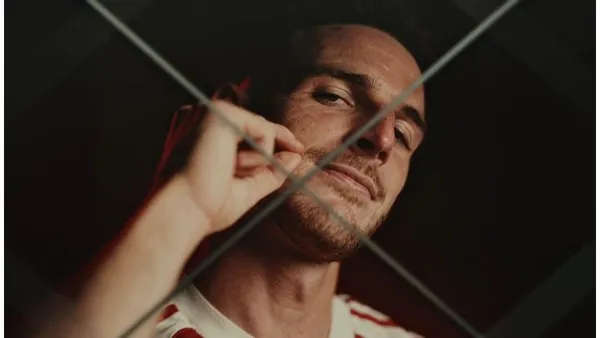
TNT SPORTS UNVEILS NEW BRAND CAMPAIGN CELEBRATING SPORT AT ITS HIGHEST LEVEL
The biggest competitions in football demand the very best from everyone involved.
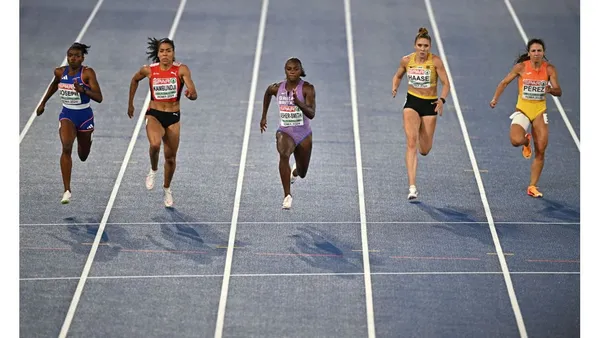
WARNER BROS. DISCOVERY EXPANDS ATHLETICS COVERAGE WITH ADDITION OF EUROPEAN CHAMPIONSHIPS
The European Athletics Championships Birmingham 2026 will be shown in 45 markets across Europe on Warner Bros. Discovery’s channels and platforms Every event will stream live on HBO Max with TV coverage on Eurosport and TNT Sports Live coverage begins on 10-16 August
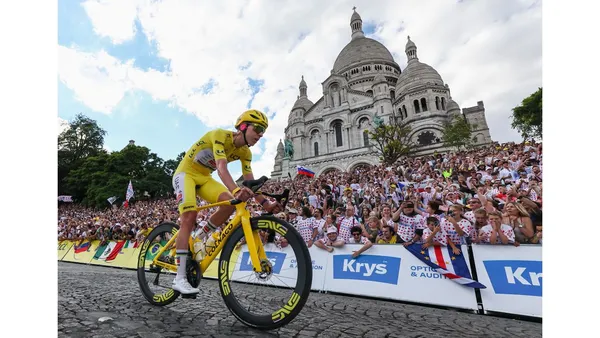
HISTORIC TOUR DE FRANCE SETS NEW BENCHMARK FOR CYCLING VIEWERSHIP IN EUROPE AS WARNER BROS. DISCOVERY GROWS ITS AUDIENCE ACROSS ALL PLATFORMS
Biggest ever Tour de France streaming audience secured across Europe on HBO Max TNT Sports reaches millions of viewers and boosts its live viewing by 58% in its first year of exclusive coverage in the UK and Ireland with free-to-air reach growing on 5 Eurosport grows pan-European viewership with its most watched Tour de France in a decade alongside record editions in France, Spain and the Netherlands

PREMIER PADEL SECURES LIVE COVERAGE ON TNT SPORTS AND HBO MAX FOR HISTORICAL FIRST EDITION OF THE LONDON PREMIER PADEL P1
The London P1 will take place from 4-9 August at Olympia and every match will be available to watch live in the UK and Ireland Action begins on 4 August at 10:00 BST with coverage across TNT Sports and HBO Max Trojan Paillot (WBD): “By partnering with Premier Padel we will showcase the very best of the sport and its athletes.” Rob Mitchell (Premier Padel): “This agreement with TNT Sports is a gamechanger for the sport in the UK and Ireland.” Stewart Hosford (Sela): “Our ambition is to elevate London P1 into one of Premier Padel’s defining tournaments. This partnership will help us bring the energy and excitement at Olympia to fans across the UK and Ireland.”
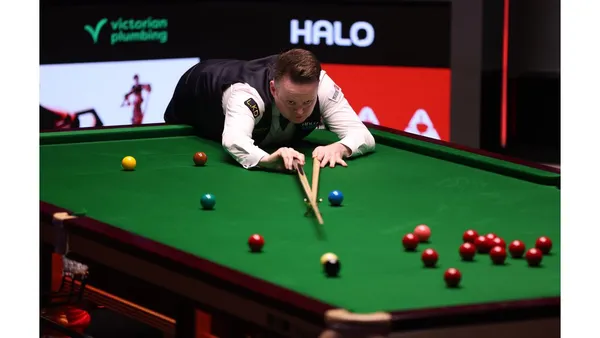
TNT SPORTS CONTINUES AS THE HOME OF SNOOKER IN THE UK AND IRELAND WITH WORLD SNOOKER TOUR EXTENSION
TNT Sports extends its coverage of the World Snooker Tour until 2031 Every frame from the World Championship, the Masters and the UK Championship will be shown live on TNT Sports and HBO Max Trojan Paillot: “Our partnership with the WST reinforces our commitment to providing fans with the most complete snooker offer”
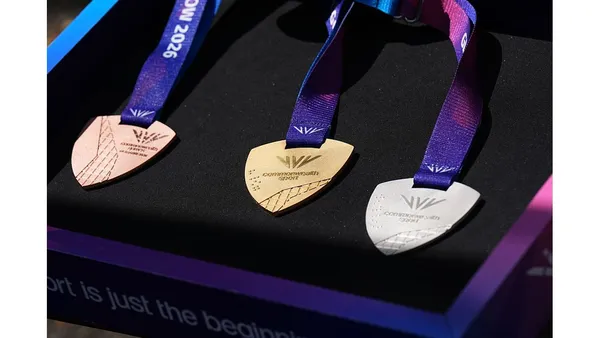
EVERY EVENT FROM GLASGOW 2026 COMMONWEALTH GAMES EXCLUSIVELY LIVE ON TNT SPORTS AND HBO MAX
Every event from the Glasgow 2026 Commonwealth Games will be exclusively live across all HBO Max subscription plans in the UK and Ireland* Never-before-seen Commonwealth Games 360 channel ensures fans never miss a key moment - Live from 08.30-22.30 every day. Enhanced streaming features on HBO Max ensure the ultimate viewing experience. The Opening Ceremony broadcast live in full on TNT Sports, HBO Max and 5 on July 23rd.
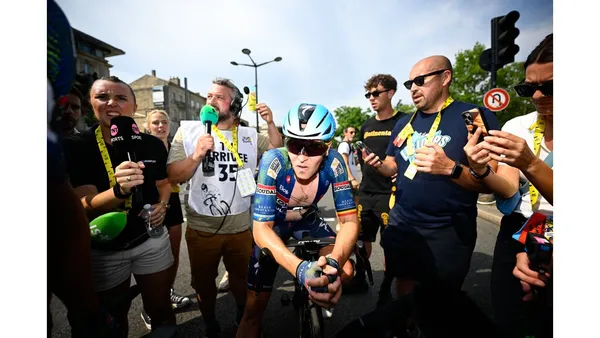
CLIMBING AUDIENCES POWER STRONG START TO TNT SPORTS’ FIRST EXCLUSIVE LIVE TOUR DE FRANCE COVERAGE
TNT Sports grows its Tour de France coverage by +41% in its first year of exclusive live coverage in the UK Streaming audiences on HBO Max in the UK have grown across all key metrics Daily free-to-air highlights on 5 are averaging more than half a million viewers, further expanding access to the race

THE COMMONWEALTH GAMES ENTERS NEW ERA WITH TNT SPORTS AND HBO MAX SET TO DELIVER NEVER-BEFORE-SEEN VIEWING EXPERIENCE
• Every event exclusively live at Glasgow 2026 Commonwealth Games across all HBO Max plans in U.K and Ireland • First-ever ‘Commonwealth Games 360’ channel, on TV and HBO Max, ensuring fans never miss a key moment. • Featuring a stellar line-up of global stars boasting 165 major competition gold medals